Tailored-fit menswear works best when fit and fabrication are considered together, not treated as separate decisions. For buyers who read garment labels closely, the difference between an ordinary piece and a considered one often comes down to seam work and material composition rather than cut alone. Reiss builds its tailored-fit range around specific fabric blends and named construction techniques that reward closer inspection. This article examines how those choices show up across suits, separates, shirts, and knitwear.
The Tailored-Fit Silhouette: How Reiss Constructs Precision Menswear
A tailored fit follows the line of the body without restricting movement, and that balance depends on pattern shape as much as fabric choice. In menswear construction generally, a tailored-fit garment is cut with less ease through the chest, waist, and thigh than a classic or relaxed fit, which changes how the seams sit against the body. Reiss applies this fit logic to trousers and shirting rather than confining it to suiting alone. The Cotton-Stretch Tailored-Fit Chinos, offered in navy, extend that approach into casual separates.
That cross-category consistency is part of what distinguishes tailored-fit menswear from garments simply labelled slim. A slim cut can narrow the silhouette without altering how the fabric behaves under movement, whereas a true tailored fit is built from the pattern outward. Reiss presents its tailored pieces as one connected range rather than a single silhouette repeated without variation.
Cotton-Stretch and Wool-Blend Fabrication in Tailored Separates

Fabric composition is where menswear reveals the most about its intended construction. The cotton-stretch fabrication used in the chinos combines a cotton base with added stretch fibre, which is named directly in the product description. That composition differs from a pure cotton fabric, which holds its shape more rigidly and does not recover in the same way after movement at the knee or seat.
Wool-blend fabrication serves a different structural purpose, appearing in layering pieces built for body and drape rather than stretch. The herringbone weave used in the overshirt pairs a wool blend with a textured diagonal pattern, which adds visual depth without altering the garment’s stretch properties. Together, these two fabrications show that material choice is tied to the specific garment rather than applied uniformly across the range. This is a meaningful distinction for buyers who expect a chino to move differently than an overshirt.
Blind-Seam Construction and Overshirt Details in Layering Pieces
The Wool-Blend Herringbone Blind-Seam Overshirt in soft grey names both a blind-seam construction and a herringbone weave, giving the piece two distinct construction points rather than one. A blind seam hides the stitch line within a fold of fabric rather than leaving it exposed on the surface, which keeps the exterior face of the fabric uninterrupted by visible thread. In outerwear and layering pieces generally, that construction choice is used where a clean, unbroken surface is wanted along a seam that would otherwise sit at eye level, such as along a yoke or front placket.
For experienced buyers, the presence of a blind seam signals that the garment’s exterior finish was treated as a design detail rather than a byproduct of assembly. It sits within the same layering category as coats and jackets, where surface finish is part of what separates a considered piece from a plainly stitched one. Reiss pairs that seam detail with the herringbone wool blend, which gives the overshirt both a textile pattern and a finishing technique working together on one garment.
Suits and Structured Tailoring: Core Range Composition
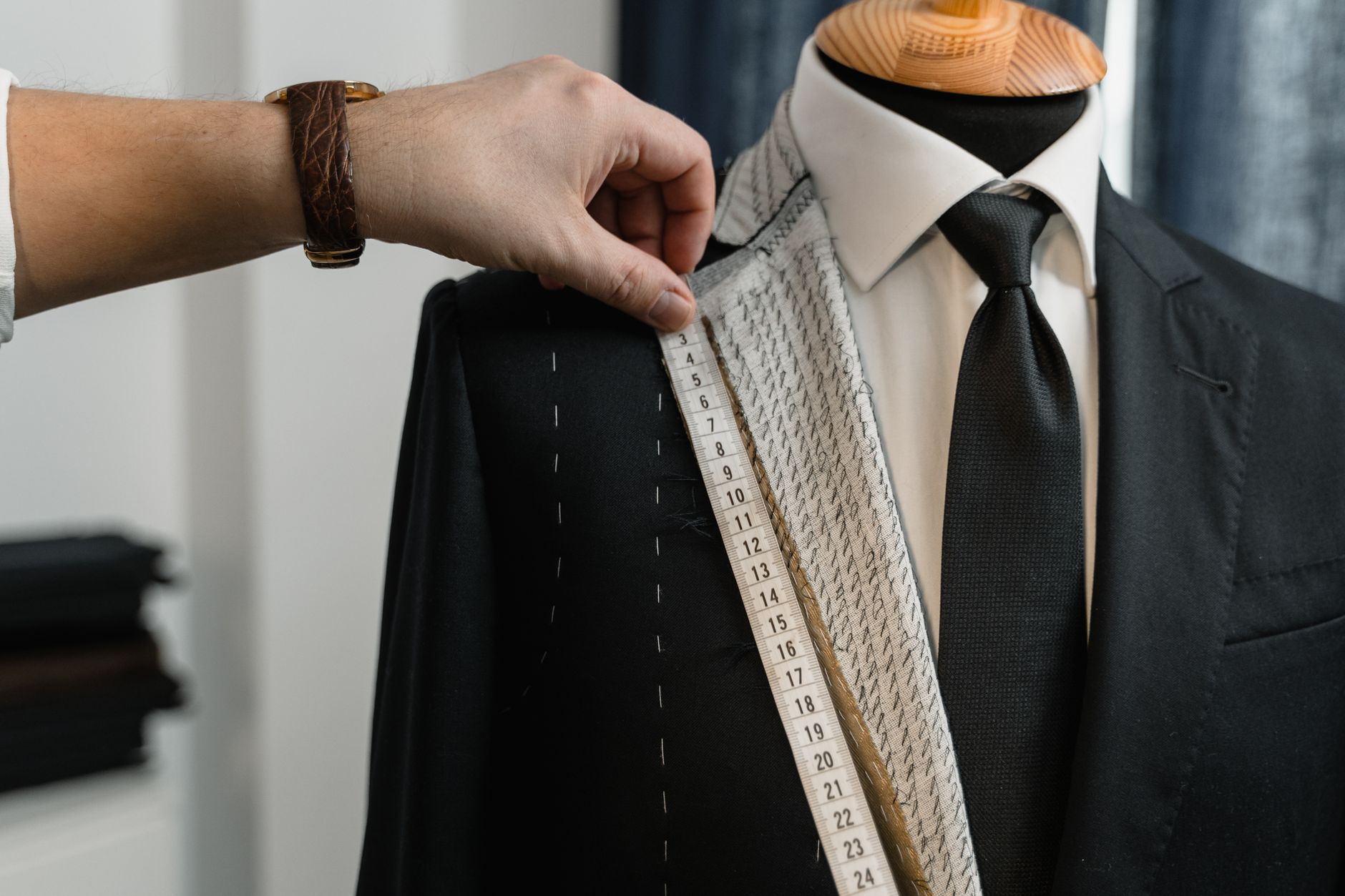
Suiting remains the anchor category for tailored-fit menswear, and structured tailoring depends on internal construction that is not always visible from the outside, such as canvassing and shoulder structure in garments built this way. Reiss organises its suiting under a dedicated men’s suits range, separate from coats and jackets, which points to a deliberate split between structured tailoring and outerwear construction. A suit jacket is typically built around a more rigid internal structure than an overshirt, which is why the two categories are not merged into one.
That separation matters to buyers comparing construction rather than category labels alone. A structured jacket and a soft overshirt may share a wool-blend fabric family, yet the internal build of each is different. Reiss keeps these as separate ranges rather than presenting one fabrication as interchangeable with the other.
Shirts and Knitwear as Foundational Tailored Layers
Shirts and knitwear complete the tailored-fit picture, worn closest to the body under a jacket or on their own. Reiss lists men’s shirts and men’s knitwear as distinct categories, which reflects that each carries its own construction concerns, from collar and cuff work in shirting to gauge and rib detail in knitwear. These layers sit directly against the skin, which is why fit precision is noticeable in daily wear rather than only when a jacket is buttoned.
In general tailoring terms, a shirt built for a tailored fit uses a narrower body block and often a side seam shaped closer to the waist, while a tailored knit relies on the yarn’s recovery rather than woven stretch fibre. That is a structural difference worth noting for buyers used to reading cut and composition together. Tailored-fit menswear, in this sense, extends the same fit logic from outer layers down to what sits underneath them.
- The Cotton-Stretch Tailored-Fit Chinos in navy combine a cotton base with added stretch fibre for recovery under movement.
- The Wool-Blend Herringbone Blind-Seam Overshirt in soft grey uses a blind seam to keep the stitch line hidden within a fold of fabric.
- The same overshirt also carries a herringbone weave, giving it a textured diagonal pattern distinct from a plain wool-blend surface.
- Men’s suits are organised as a separate range from coats and jackets, reflecting a difference in internal structure between the two.
- Men’s shirts and men’s knitwear are listed as their own categories, each carrying construction concerns specific to that garment type.
Across these categories, Reiss treats tailored-fit menswear as a set of garments defined by specific fabrications and finishing techniques rather than one repeated silhouette. Cotton-stretch chinos, wool-blend knitwear, and a blind-seamed overshirt each show a different construction choice suited to how that garment is worn. For buyers comparing stated composition and stitch detail, that variation is the part worth examining closely.
Construction detail, more than category labels, is what separates one tailored-fit garment from another.